
Family Beyond Biology
Never Kiss a Man in a Christmas JumperThis thread explores how Maggie’s infertility shapes her fear of loving Marco, and how the story challenges the assumption that family must depend on biological parenthood.
increasing Bearing strength in each event
 decreasing
Bearing strength in each eventdecreasingA Future Closed by Crisis
A Future Closed by Crisis
The emergency
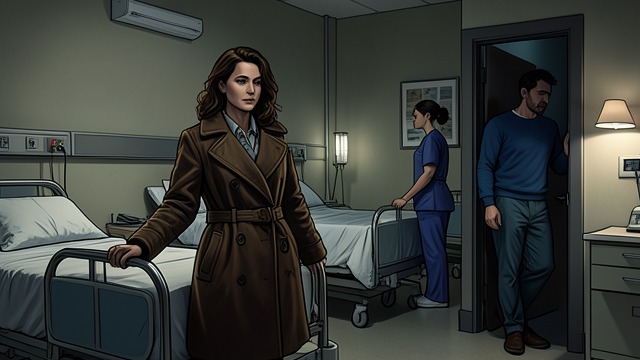
Maggie gives birth to Ellen after a long and difficult labor. Soon afterward, a severe postpartum hemorrhage turns the delivery room into a medical emergency, separating mother and child while doctors work to stop the bleeding.
Maggie wakes to a changed future: she has survived an emergency hysterectomy and blood transfusion. At sixteen, caring for one baby is already overwhelming, so she cannot yet grasp that the operation has permanently ended the possibility of bearing another child.
A loss deferred
The consequence arrives slowly rather than as an immediate, fully understood grief. In the years that follow, Maggie concentrates on raising Ellen, recovering stability with Paddy’s help, and developing her work as a dressmaker.
Only later, as she watches other families expand and Ellen grow toward independence, does the absence of possible future children become emotionally legible. The history establishes infertility not as an abstract limitation but as a loss folded into decades of practical survival.
The Family She Can Give
The Family She Can Give
Seeing Marco with children
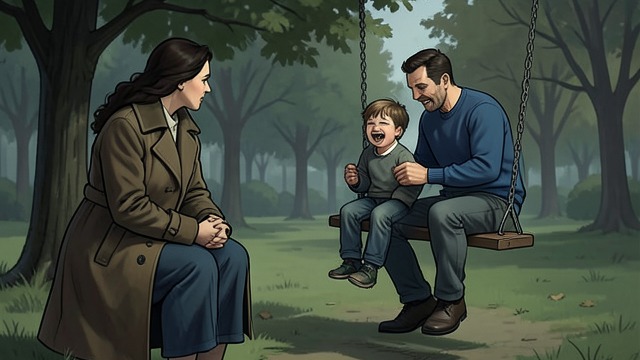
Maggie first notices Marco in the park, absorbed in playing with his young nephew Luca. She assumes the boy is his son and sees in their ease together a picture of fatherhood that seems natural to Marco.
Later, she learns that Marco is Luca’s uncle, but the impression remains. At Gaynor’s wedding, Marco entertains a young child in his wheelchair with patient, joyful attention, reinforcing Maggie’s belief that he has a gift for children and might want a family of his own.
A private comparison
Maggie’s observation is affectionate, yet it becomes a source of dread. She has evidence of Marco’s capacity to care for children, but treats that capacity as proof that he must eventually want biological children above everything else.
Her own history makes the inference emotionally powerful. Instead of asking what Marco wants from a life with her, she compares herself with an imagined future partner who could offer him the family she cannot bear.
A Confession to Leah
A Confession to Leah
The visible family
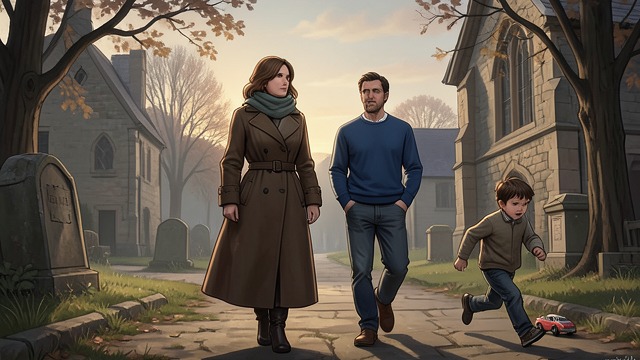
At Luca’s Christening, Maggie watches Marco join the children in the snow. He is animated and at home among them, while Leah’s family gathers around its growing circle of relatives.
The scene activates the fear Maggie has been trying to keep separate from her new relationship. She loves Marco, but believes that continuing to love him may deny him the fatherhood she assumes he deserves.
Naming the hidden loss
Maggie tells Leah that she loves Marco and cannot have more children. She explains that her inability to become pregnant again has been a private fact for years, known only to Paddy, and that she fears a future in which Marco discovers he needs something she cannot provide.
Leah listens without dismissing the loss, then asks whether Maggie has let Marco decide what he wants. The question shifts infertility from a solitary verdict into a relationship problem that deserves shared knowledge and shared choice.
Love Against the Assumption

Love Against the Assumption
The feared bargain
After Maggie leaves Scotland, Marco comes to find her beside the river. He has learned about her history and understands why she ran, but rejects the idea that his love depends on her ability to have children.
Maggie still fears that affection cannot withstand a future conflict between their relationship and his desire for parenthood. She has been treating an uncertain possibility as a certain sacrifice, deciding on Marco’s behalf that leaving him is the kinder choice.
A broader definition
Marco says that children may or may not belong in their future and offers possibilities that include adoption and close involvement with the children already in his family. He does not pretend that her loss can be undone; he argues instead that it need not define the entire shape of their life.
Maggie’s eventual yes marks a move from protecting Marco through exclusion to trusting him with the truth. The story makes partnership, rather than biological reproduction, the basis on which they can consider a family together.
A Family Chosen in Practice
A Family Chosen in Practice
A widening circle
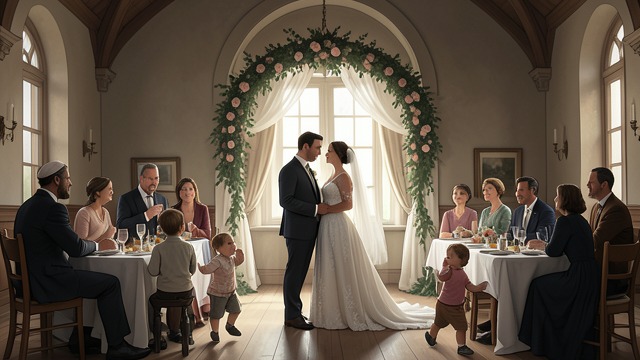
A year after their first Christmas together, Maggie and Marco marry among relatives and friends from both sides of their lives. Children fill the celebration, including Luca and the new baby born to Leah and Rob, while Ellen and Paddy remain part of Maggie’s family world.
The wedding does not erase the fact that Maggie cannot have another child. Instead, it places her within a family whose bonds are sustained through affection, shared history, and deliberate inclusion.
Belonging without a replacement
Marco’s suggestion of a close, shared place in the lives of Luca and Rob’s children becomes part of the future they can imagine. The family is not presented as a substitute that cancels grief, but as a real network in which care and attachment do not depend on shared biology.
Maggie’s sense of being whole grows from being accepted without a condition she cannot meet. The ending gives her a spouse and an extended family while preserving the truth of her earlier loss, offering belonging without pretending that every absence has been repaired.
At Ellen’s birth, in the late 1990s
During the early days of Marco’s recovery
At Luca’s Christening reception in Scotland
On Christmas Day, after Marco finds Maggie
At Maggie and Marco’s wedding, one year later
